Why Lineage Matters in Modern Brand Identity

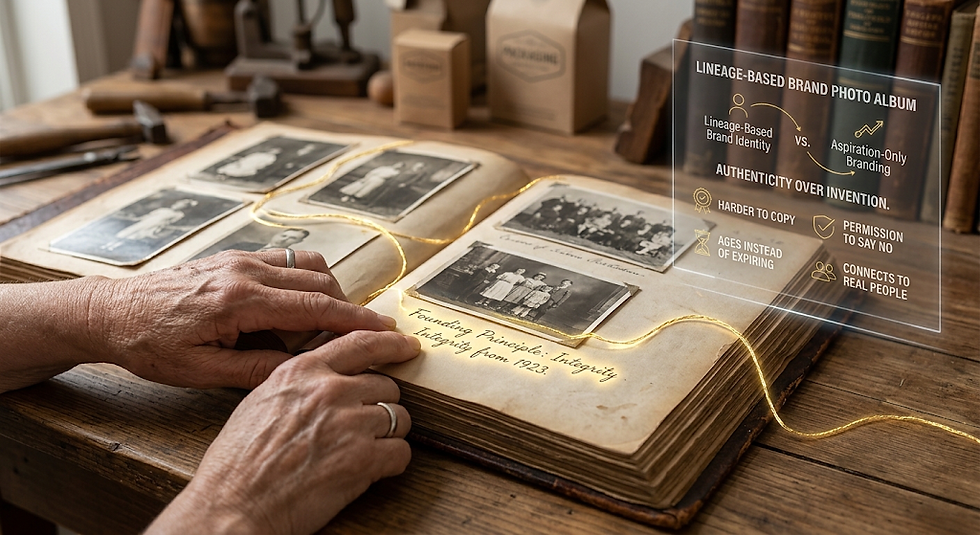
Most brand identity work starts with a question that sounds reasonable and is actually a trap: "Who do we want to be?"
It's a trap because it invites invention. And invented identity is fragile — it has to be maintained, defended, and constantly re-explained, because nothing underneath it is actually load-bearing. The moment the market shifts or the founder leaves or the trend passes, the identity built on aspiration alone starts to wobble.
There's a sturdier question, and it's the one lineage-based work starts with instead: "Who have we already been, and what does that tell us about who we're becoming?"
Lineage isn't nostalgia. It's not "tell the founding story" as a slide in the deck. It's the practice of tracing a thread — through a family, a neighborhood, a craft, a struggle — and finding the parts of it that are still true, still active, still doing work in the present. Then building the identity from that thread instead of draping a new identity over it.
Here's why that holds up longer than aspiration-first branding:
It's harder to copy. A competitor can copy your color palette, your tone of voice, your tagline. They cannot copy your lineage. Nobody else has your specific history, your specific place, your specific people. That's not a metaphor — it's the actual competitive moat.
It gives you permission to say no. When your identity is rooted in where you actually come from, you have a built-in filter for what fits and what doesn't. Aspiration-only brands say yes to almost anything that "feels aligned" in the moment, because there's no ground truth to check against.
It ages instead of expiring. Trends expire. Lineage ages — it gets deeper, more textured, more valuable the longer you stay in relationship with it. A brand built on lineage gets more itself over time. A brand built on aspiration has to keep reinventing itself to stay relevant.
It connects to real people, not personas. Lineage work almost always surfaces actual people — a grandparent, a mentor, a community elder, a historical figure whose story got buried. Those people are more compelling than any persona a strategy deck could invent, because they're real, and audiences can feel the difference.
This is the work behind The Senses of Silence — tracing one family's history through the Port Chicago disaster to understand what got carried forward in silence, and what that silence still shapes today. It's also the work behind The Alignment Engine, which takes that same instinct — trace the thread, find what's still true, build forward from there — and turns it into a weekly discipline anyone can practice.
If your brand identity can't answer "where does this actually come from," it's not an identity yet. It's a placeholder.


Comments